 JAPAN'S BEST-DESIGNED CAFÉS
Q&A
Are there cafés in old warehouses or factories?
Yes. Blue Bottle Coffee converted a warehouse in Kiyosumi-Shirakawa and a three-storey steel-framed former factory in Nakameguro into cafés. Both keep the building's frame and open to the town with glass and windows.
Blue Bottle Coffee Kiyosumi-Shirakawa Flagship Cafe →
A warehouse turned roastery and café
The Kiyosumi-Shirakawa shop remade a former warehouse into “roastery, storage, kitchen, office and café”. Works finished in October 2014, and it opened in February 2015.
Big glass doors and partitions link street and shop, and ground and 2nd floor, by sight — turning the warehouse's closed box into an open place.


Blue Bottle Coffee Nakameguro Cafe →
A steel-framed former factory, lightly touched
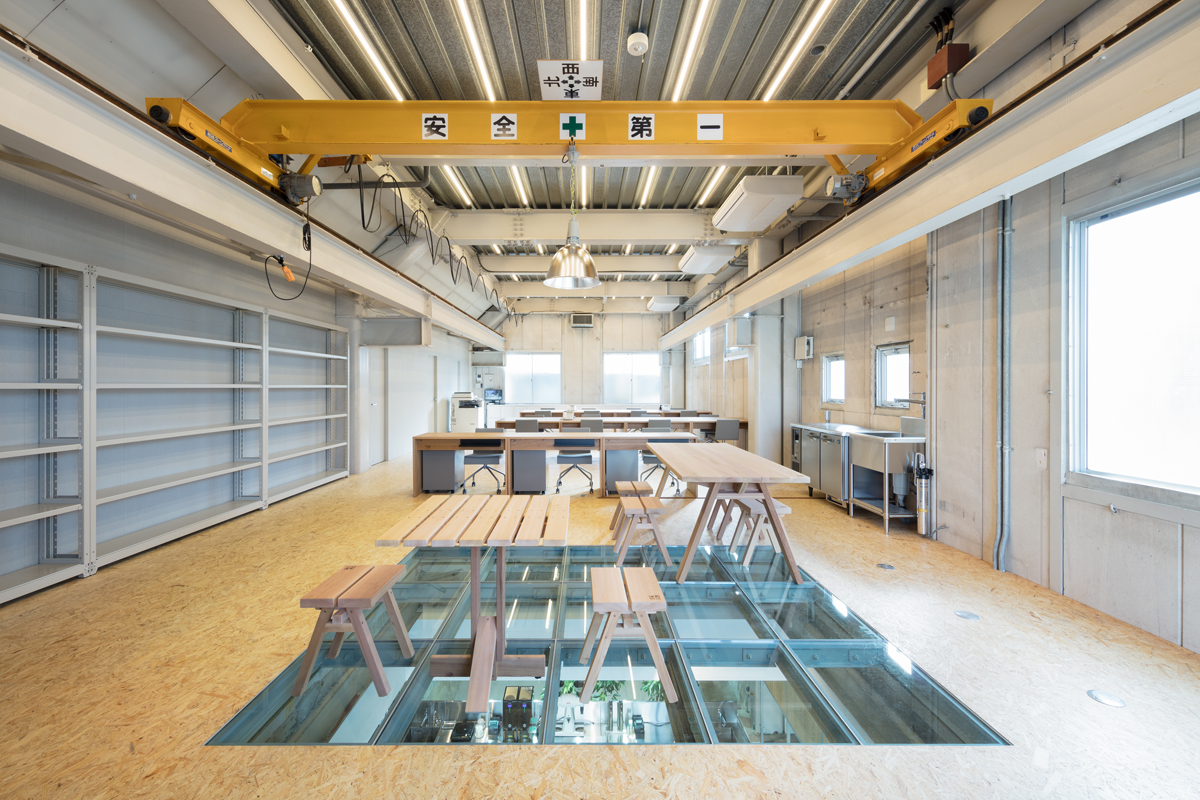
The Nakameguro shop is a three-storey steel-framed former factory. The frame and the character of its walls were kept, with work done only where needed.
Factory roughness and the finesse of coffee equipment share the same space. The upper floors hold the office and barista training space.
Blue Bottle Coffee Shinagawa Cafe →
In a station building: materials, not frame
The Shinagawa shop is by the same designers, in a unit of a station building. White Takigahara stone from Ishikawa and wood were used for floor, walls and counter.
Unlike Kiyosumi-Shirakawa or Nakameguro, it is shaped not by exposing an existing frame but by the colour and texture of its materials.

What is renovation?
Reusing an old building without demolishing it, changing its use and interior. Turning a warehouse or factory into a café is one example.
Things hard to create in a new building — high ceilings, an old frame — become the shop's charm.
Other questions


 QWhy do some cafés centre on counter seating?


 QWhat's different about cafés that take reservations?


 QAre there comfortable cafés inside stations or station buildings?

 QIs it true some cafés charge an entry fee?

 QHow is a historic wagashi house's “karyo” different from a café?


 QWhat kinds of Japanese-tea cafés are there?
