 JAPAN'S BEST-DESIGNED CAFÉS

Introduction
A shop themed on regeneration and circulation
The official website introduces the café's theme of “regeneration and circulation” — the concept of Meiji Jingu's forest, made tangible inside.
Its timber includes Japanese wood and dead or damaged trees from those donated for the shrine's construction. The forest's trees have changed form to become part of the café.
01 · Exterior
A timber exterior and wooden deck
The official website highlights the gentle timber exterior and wooden deck.
It stands within Meiji Jingu's grounds, covered by 700,000 m² of forest.

02 · Counter
A counter of fallen trees
The counter uses dead or damaged trees from Meiji Jingu.
Trees from the shrine's forest have taken a new form as this counter.


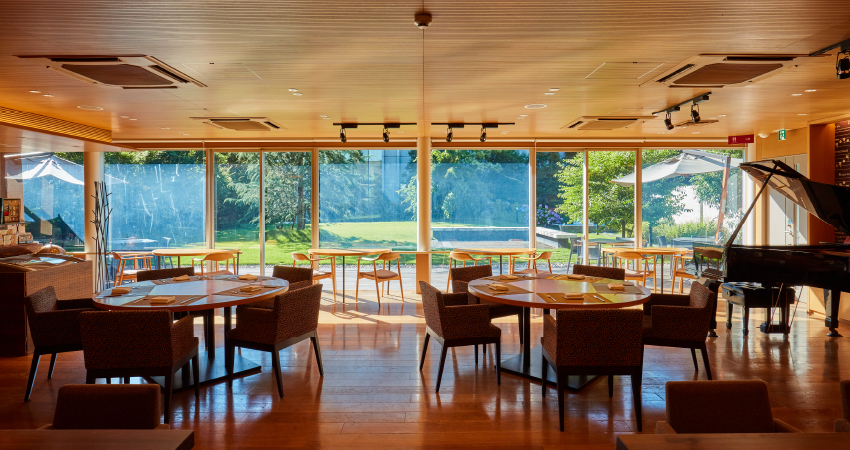
03 · Seating
Furniture made from the forest
The furniture also uses Meiji Jingu's fallen trees.
It is open from 9:00 until the gates close; closing varies by month, with last orders 30 minutes before.


What are “koson-boku”?
Trees that have died or been damaged and can no longer be left standing. Mori no Terrace uses Meiji Jingu's koson-boku for its counter and furniture.
Giving forest trees a second life as timber ties into the café's theme of regeneration and circulation.