 JAPAN'S BEST-DESIGNED CAFÉS
Introduction
Frames layered like a film set
The architects noticed how Ozu places frames in the backgrounds of his scenes. They transposed this principle, which naturally recalls an older Japan, into a coffee house.
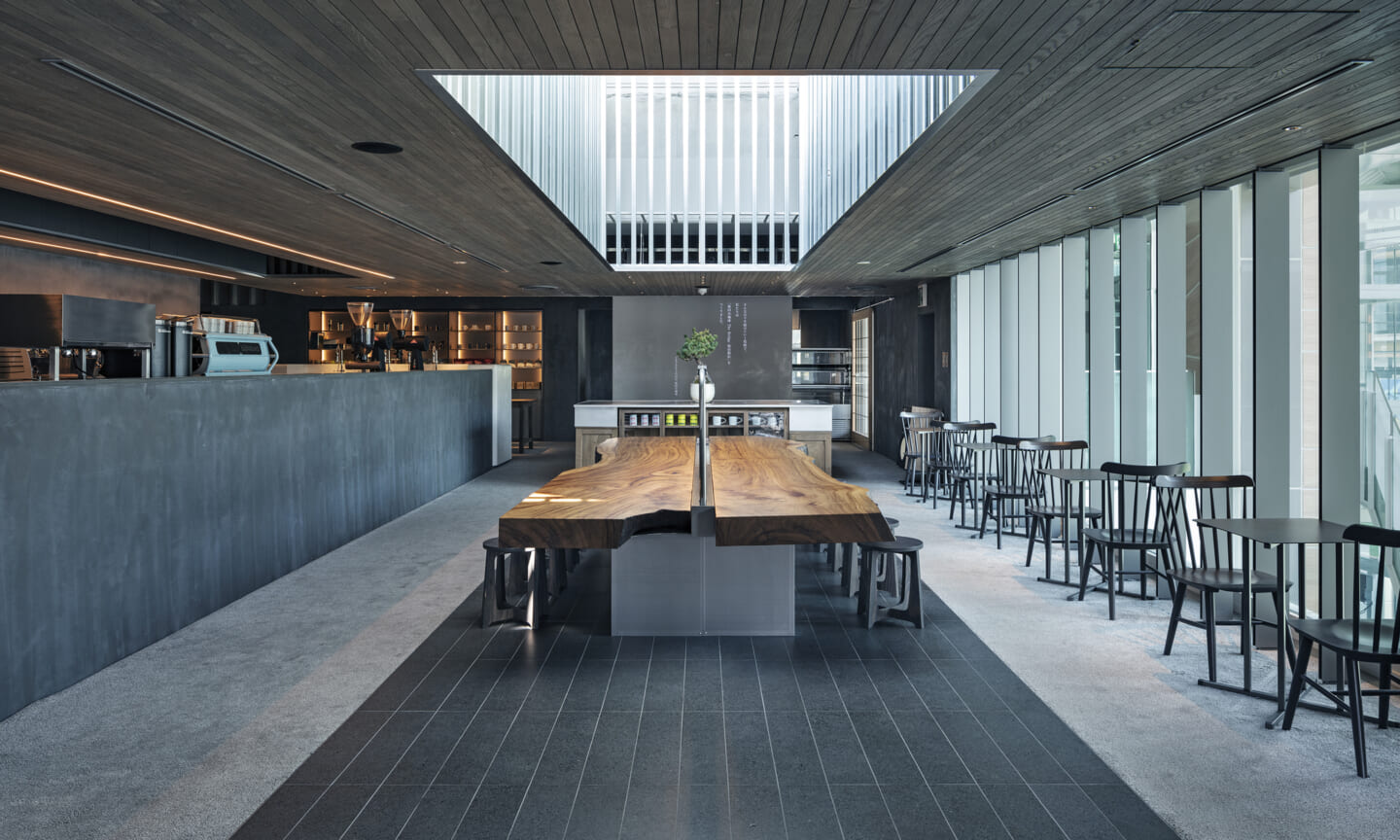
Frames of ceiling lattice, shoji, tile joints, tatami, shelving and fittings are scattered through, with plastered surfaces sharpening the lines. Electronic signs and big screens in the city beyond the windows are deliberately left visible as “modern borrowed scenery”.
01 · Large table
A single slab under the skylight
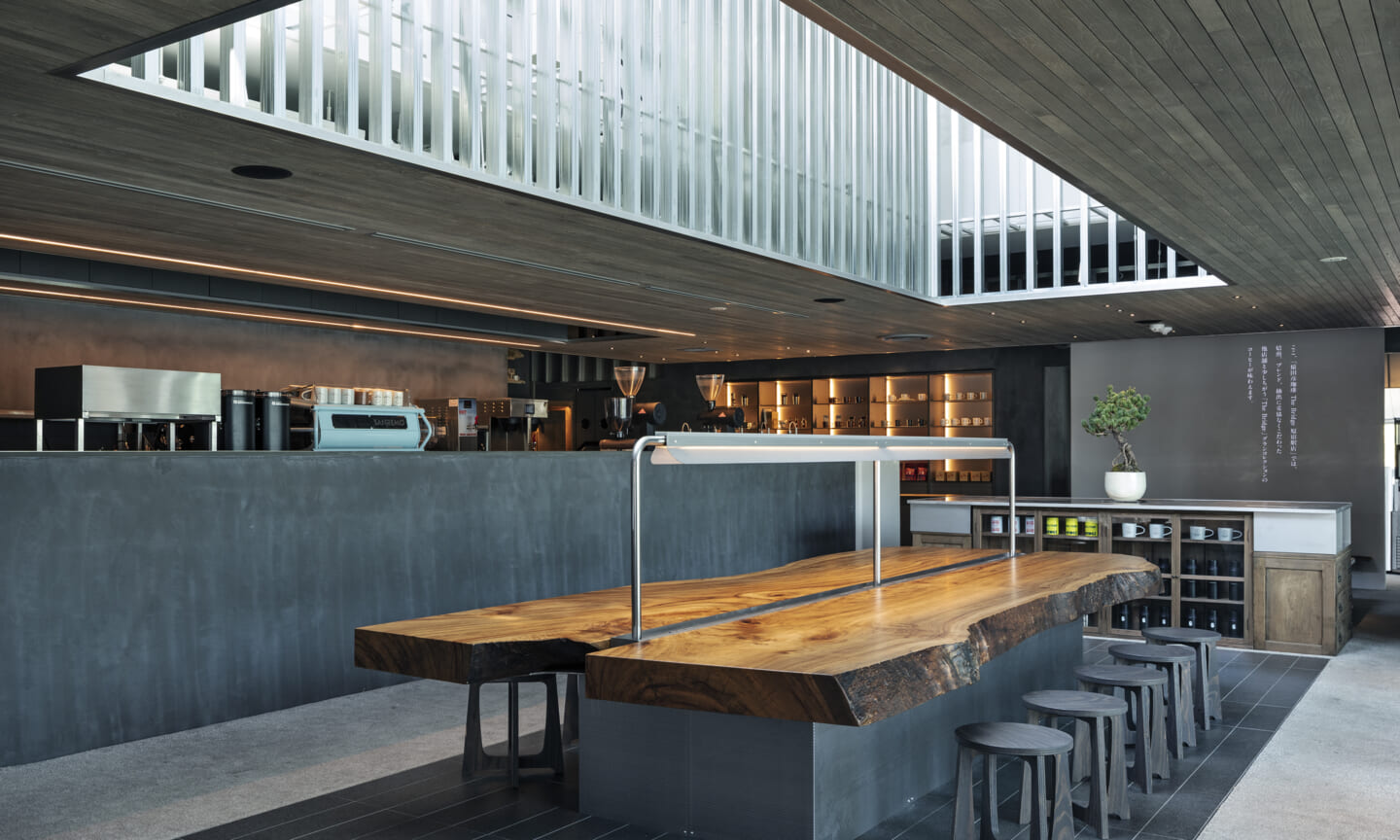
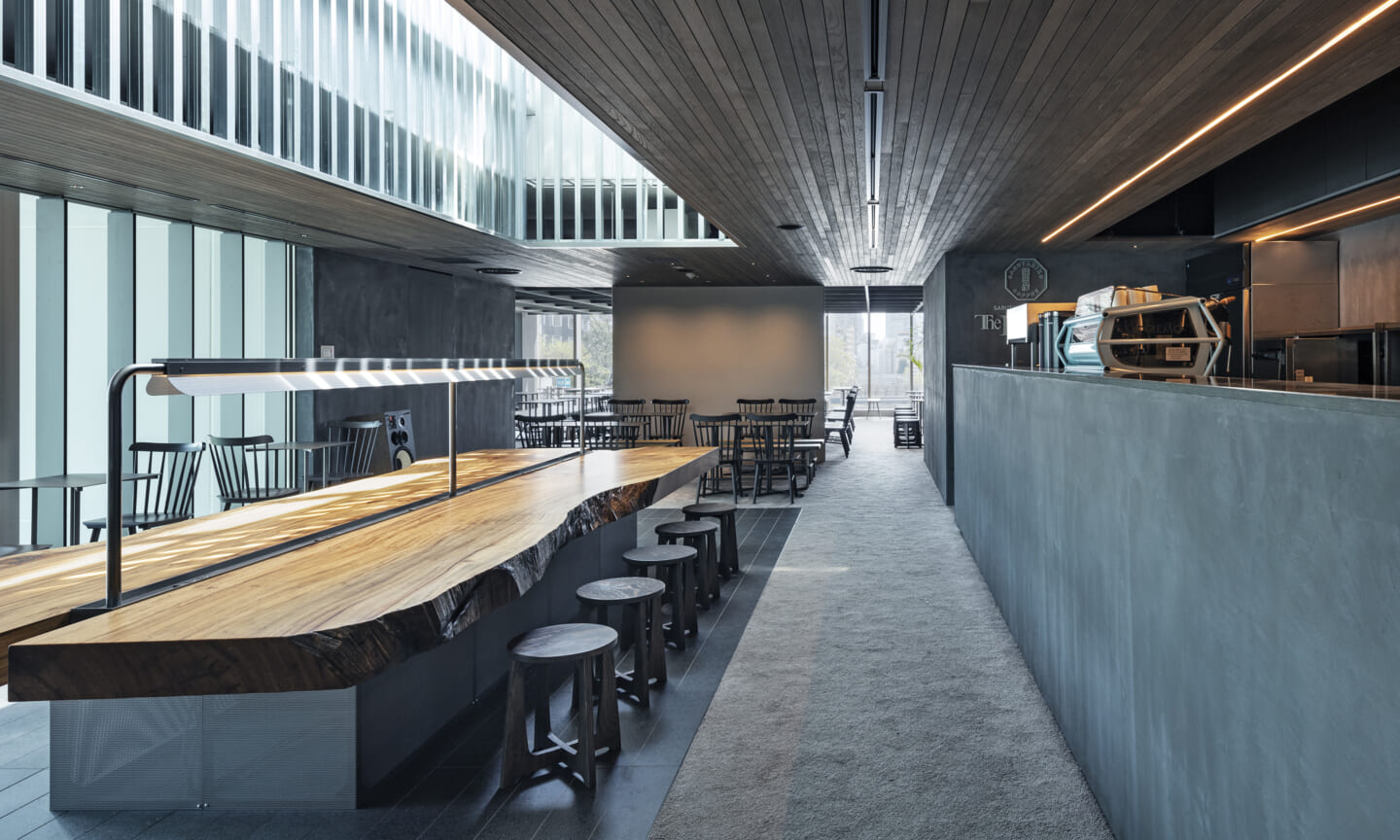
At the centre, a large single-slab table sits beneath a skylight.
The timber ceiling contrasts sharply with grey walls and floor.
02 · A plan like alleys
Eaves that add depth
In places, eaves lower the ceiling to give calm and depth.
You can wander through the shop as if strolling down alleys.
03 · Shoji and tatami
Divided by a Japanese grid
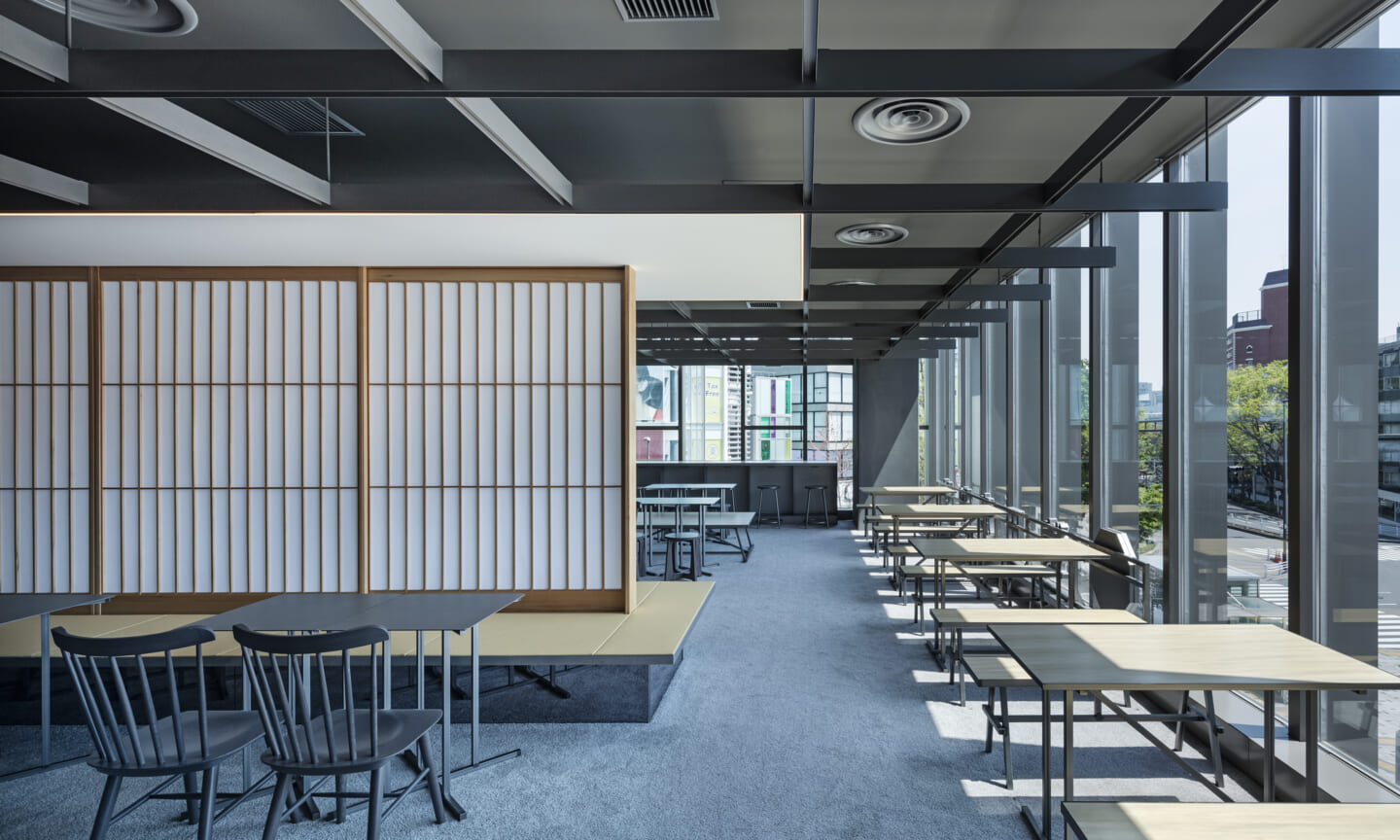
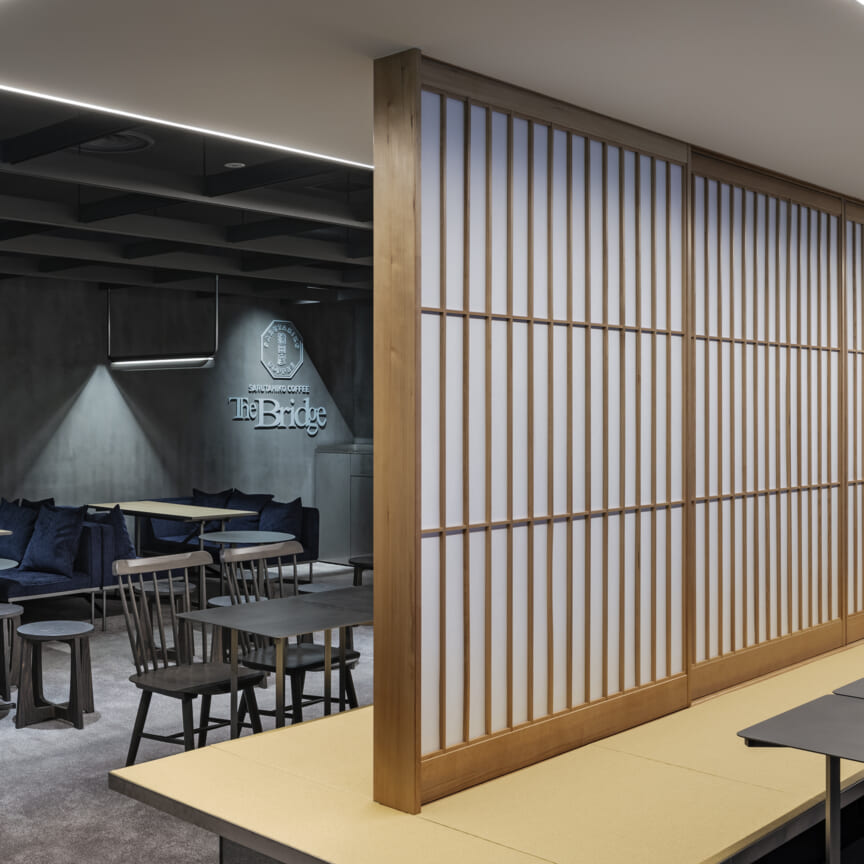
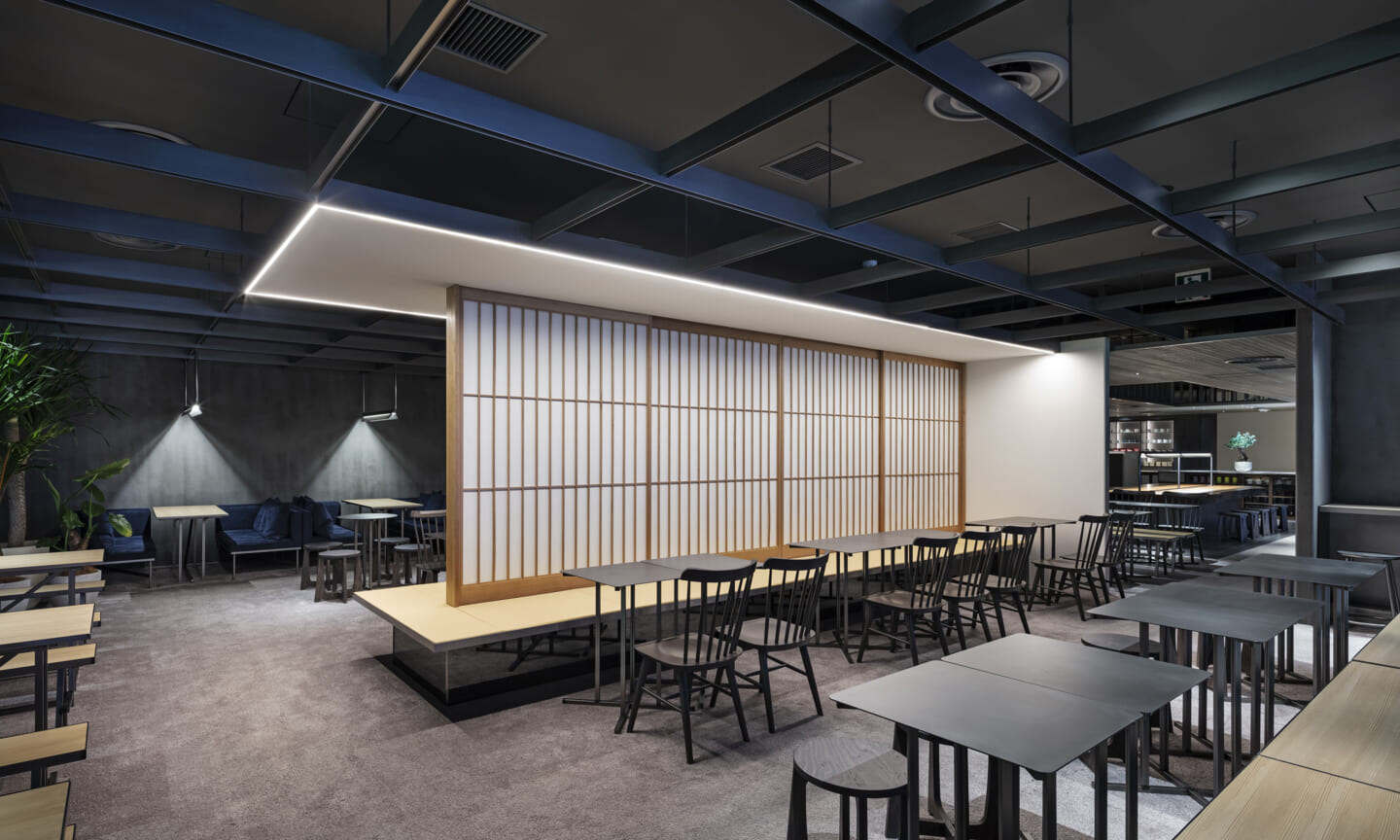
Shoji and raised tatami areas gently divide the seats.
Combined with modern materials such as steel and carpet, past and present share the room.
What is shakkei?
Taking scenery beyond the garden — mountains or trees — into the view.
At The Bridge Harajuku Station, the city's signs and big screens seen from the windows are left as “modern borrowed scenery”.