 JAPAN'S BEST-DESIGNED CAFÉS
Introduction
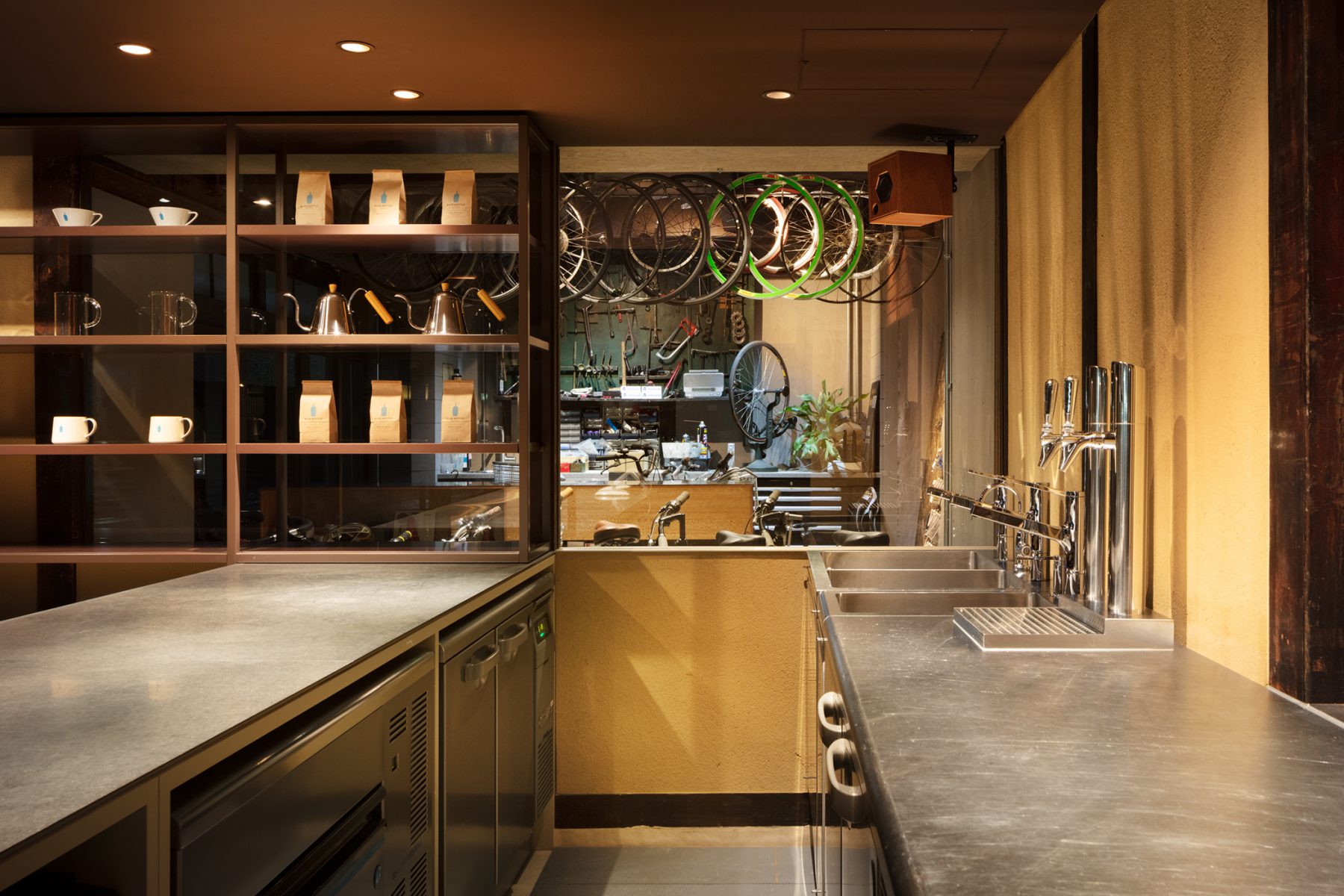
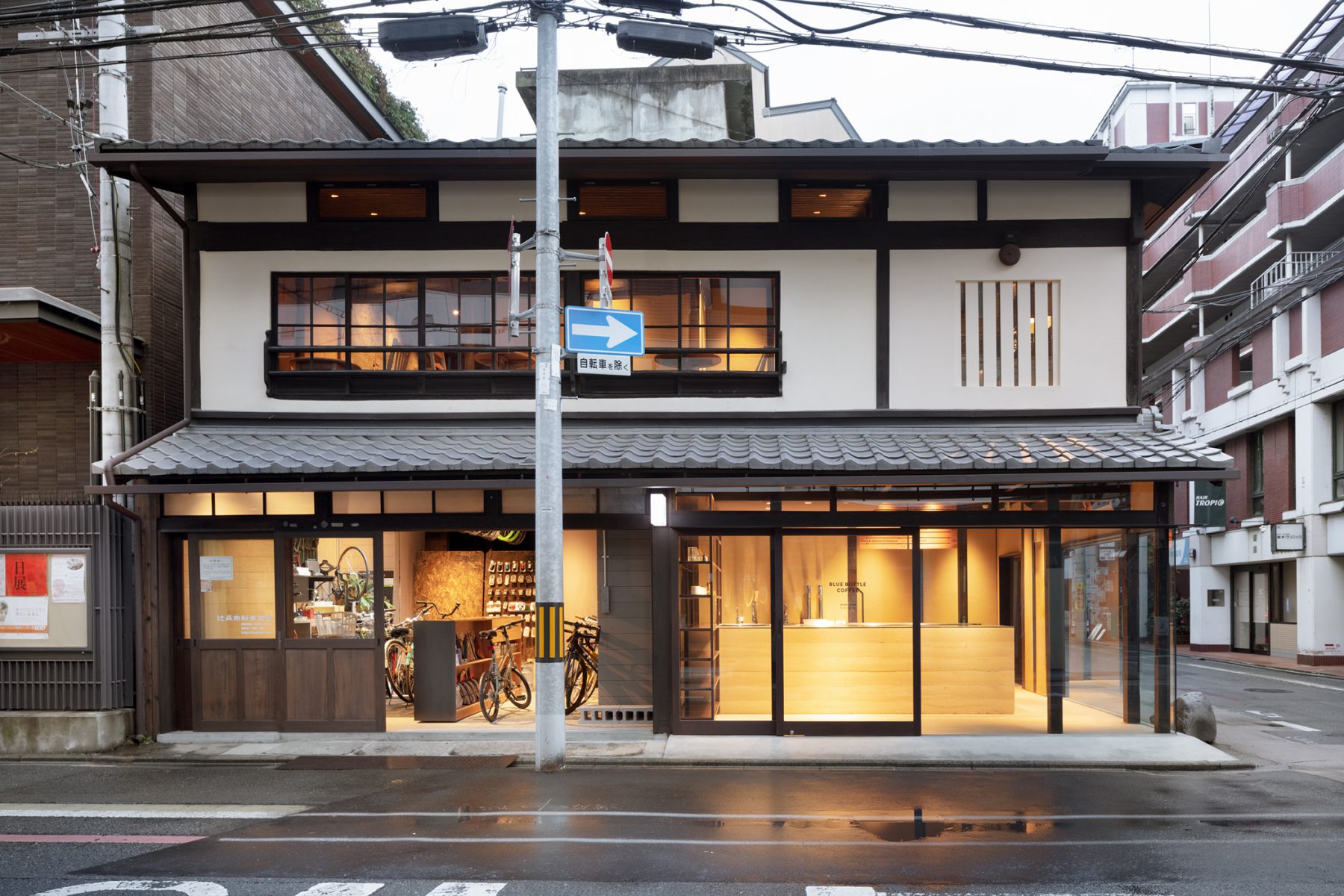
Next door to a bicycle shop
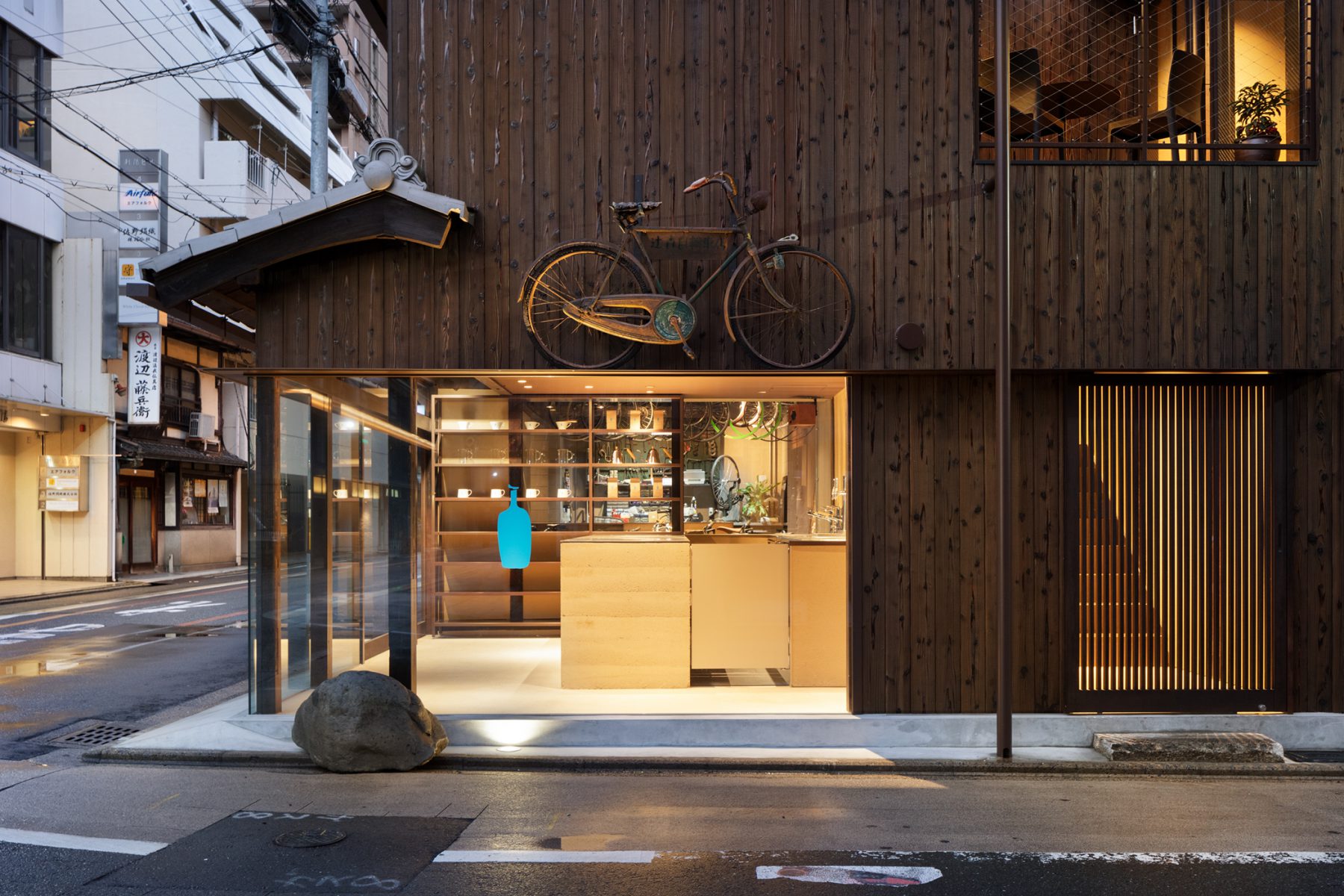
The café and bicycle shop are divided by glass; from the café you can watch the bicycle shop across the counter.
Large openings to the outside make shop and street continuous. The architects write that, as a small shop, they kept it from standing out too much.
01 · Machiya
Mushiko-mado windows and Kitayama cedar, kept
The building was known as one of the most traditional machiya in the area.
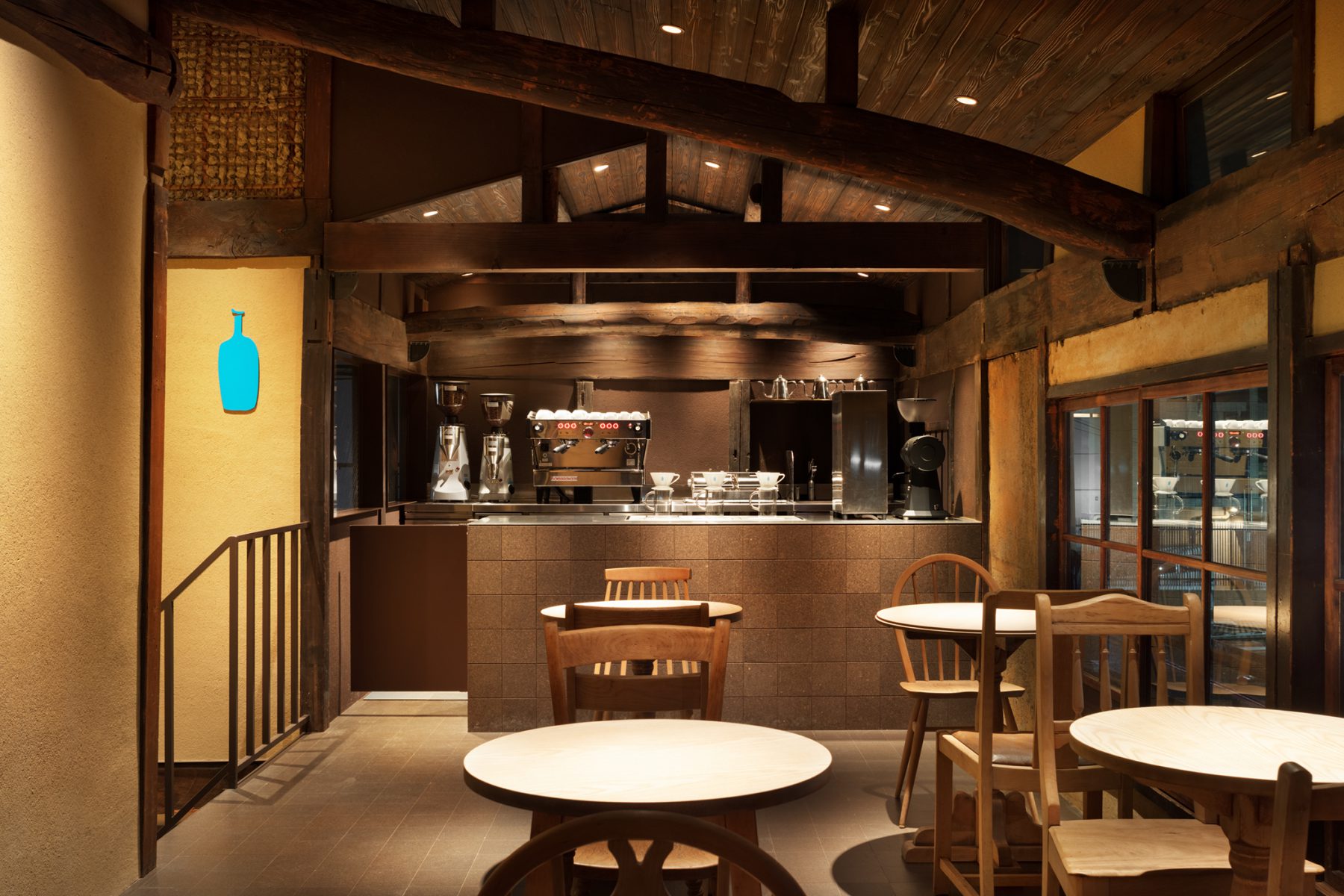
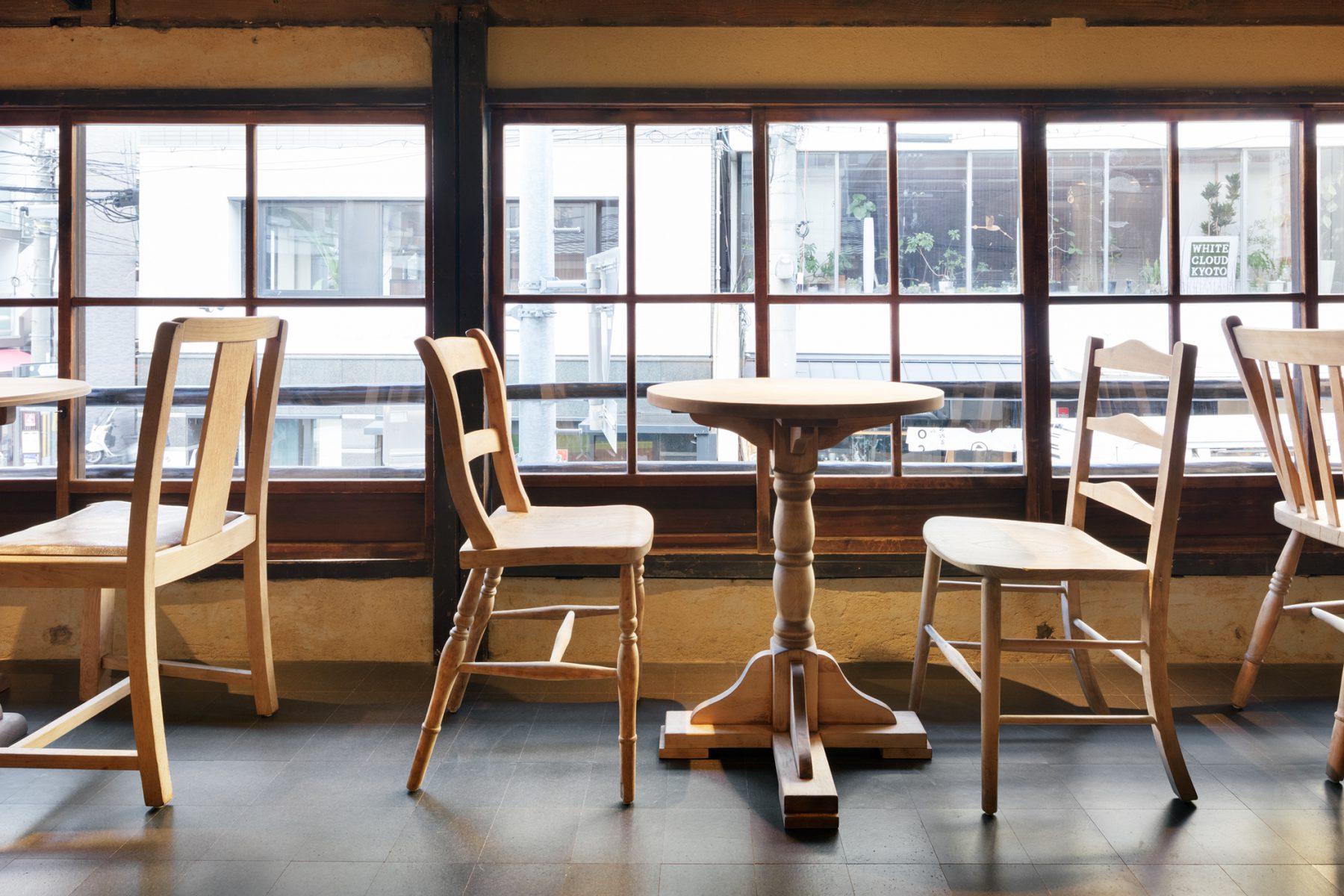
Machiya features such as the mushiko-mado windows, wooden sliding doors and Kitayama cedar handrails are kept.
02 · Colour
Beige to match the kraft-paper bags
So that the coffee beans — the best-selling product — catch the eye, beige materials close to the kraft-paper bean bags were chosen.
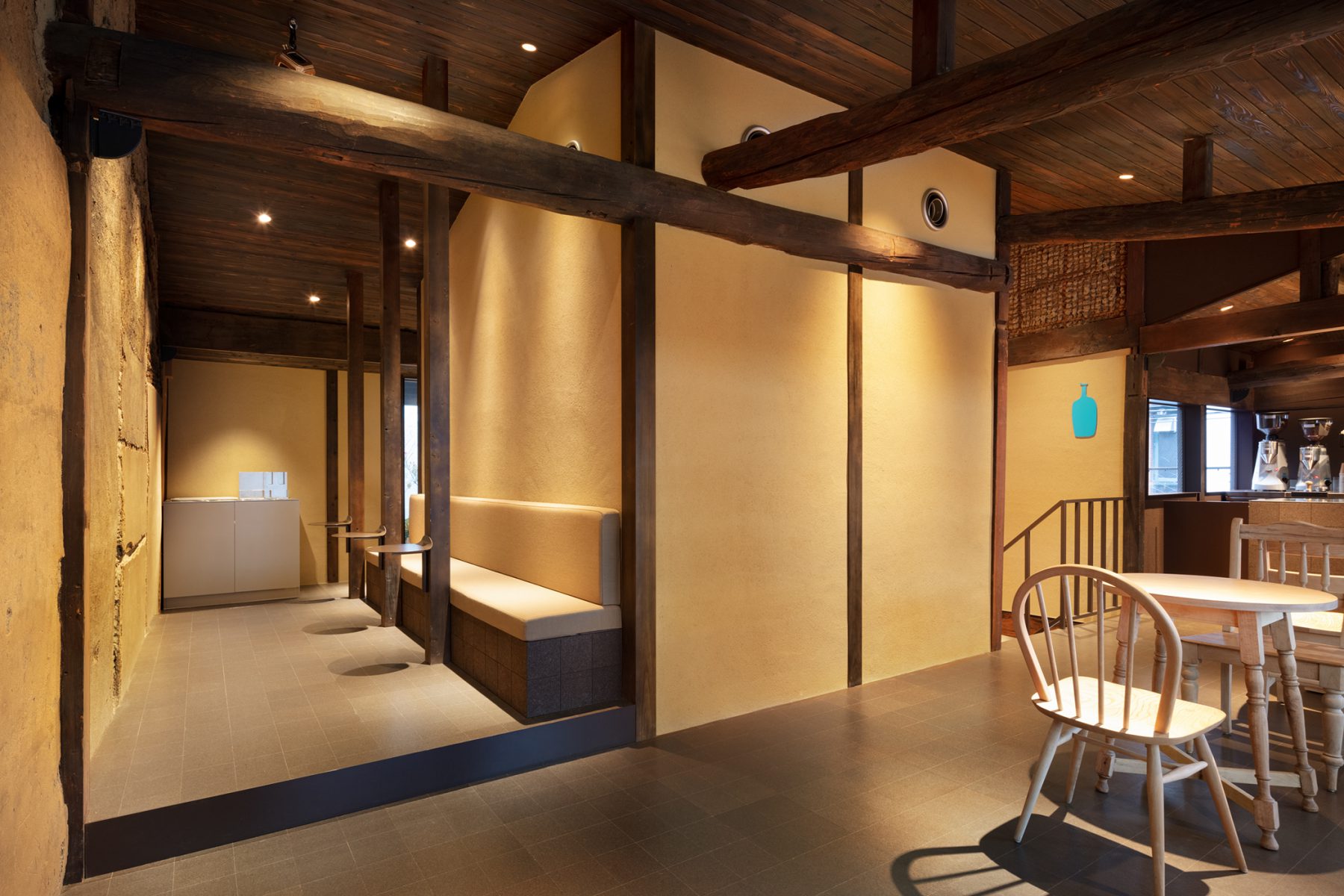
The earthen floor, rammed-earth and clay walls are set against a dark brown background.
03 · Furniture
Old chairs sanded back to bare wood
For the upstairs seating, old chairs and tables were gathered and sanded until the bare wood showed in beige.
Furniture in a new colour sits comfortably in the old machiya.
What is a mushiko-mado?
A window with narrow slats found on the 2nd floor of Kyoto machiya. It is named for its resemblance to an insect cage.
Kyoto Rokkaku Cafe keeps the machiya's mushiko-mado as they were.


