 JAPAN'S BEST-DESIGNED CAFÉS

Introduction
Warehouses as a hub for the community
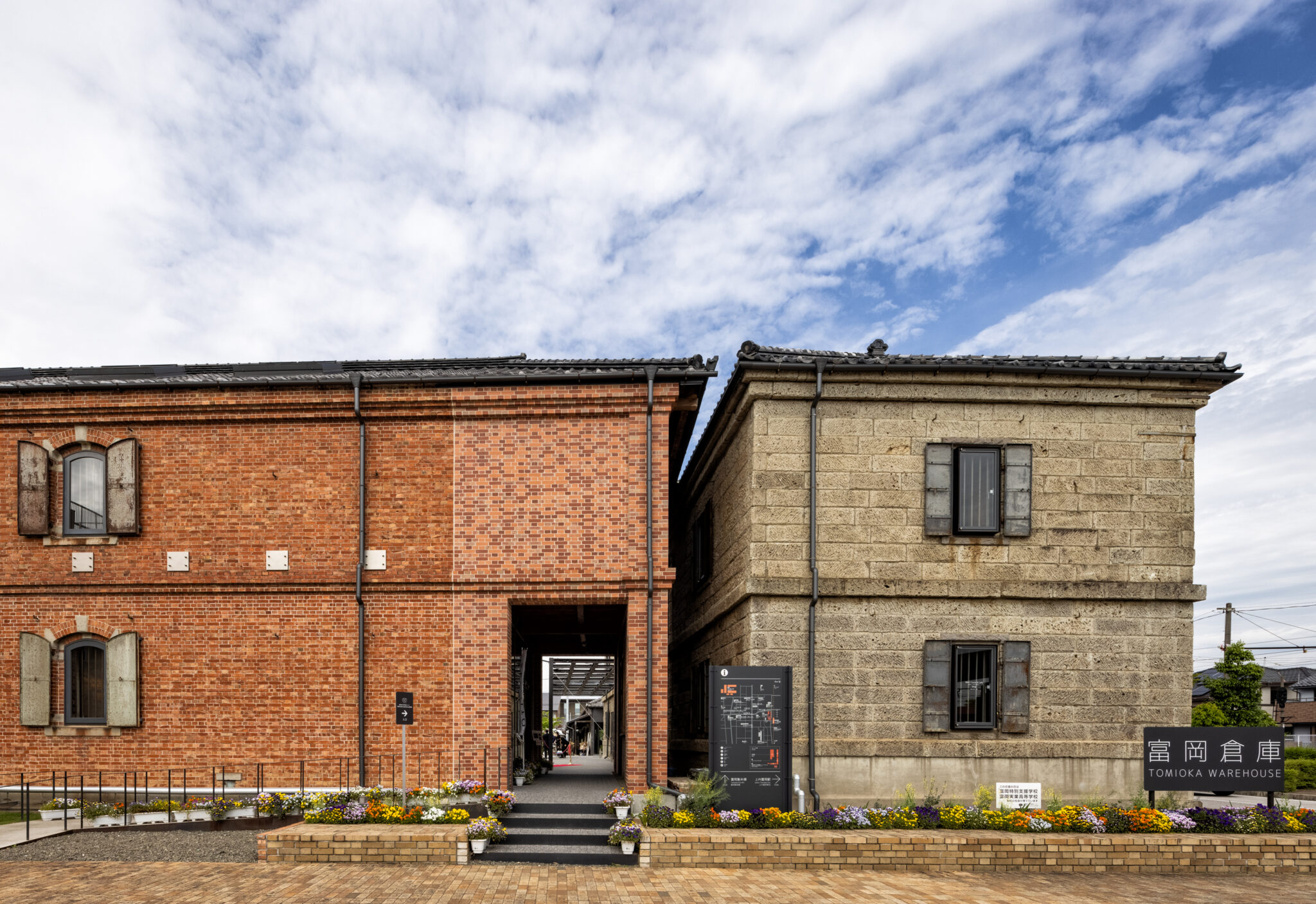
The warehouses by Joshu-Tomioka Station prospered with the silk industry centred on the World Heritage Tomioka Silk Mill (1872). They were strengthened against earthquakes with new techniques such as carbon fibre and revived as a community hub.
The architects say Warehouse No. 2, built of stacked Oya stone in 1923, was given movement and lightness to suit a café.
01 · Bracing
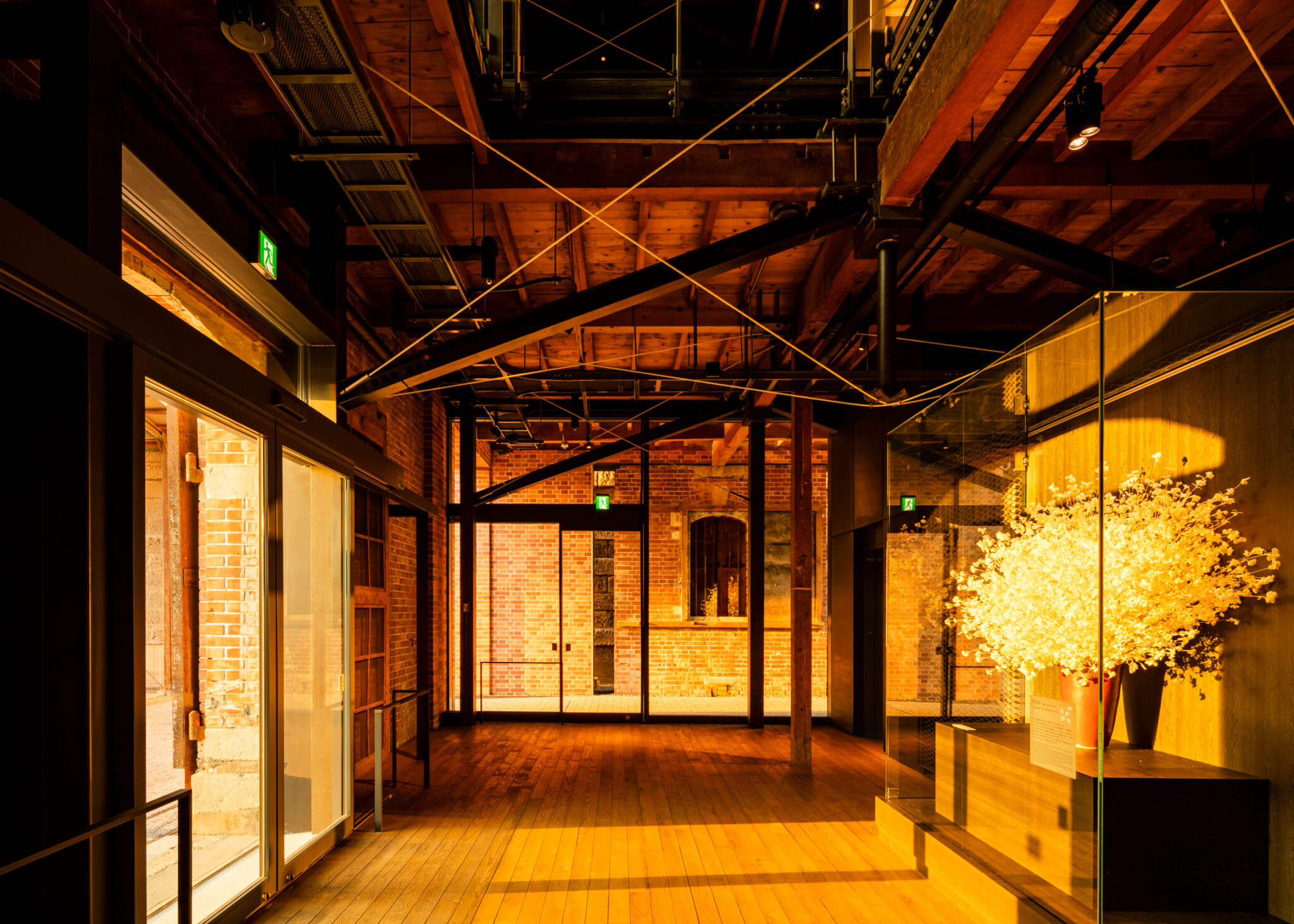
Bracing like cat's cradle
Warehouse No. 2 is braced against earthquakes with carbon-fibre members and 3D-printed joints spanning both floors, like a game of cat's cradle.
02 · Plaza
A warehouse at one with the plaza
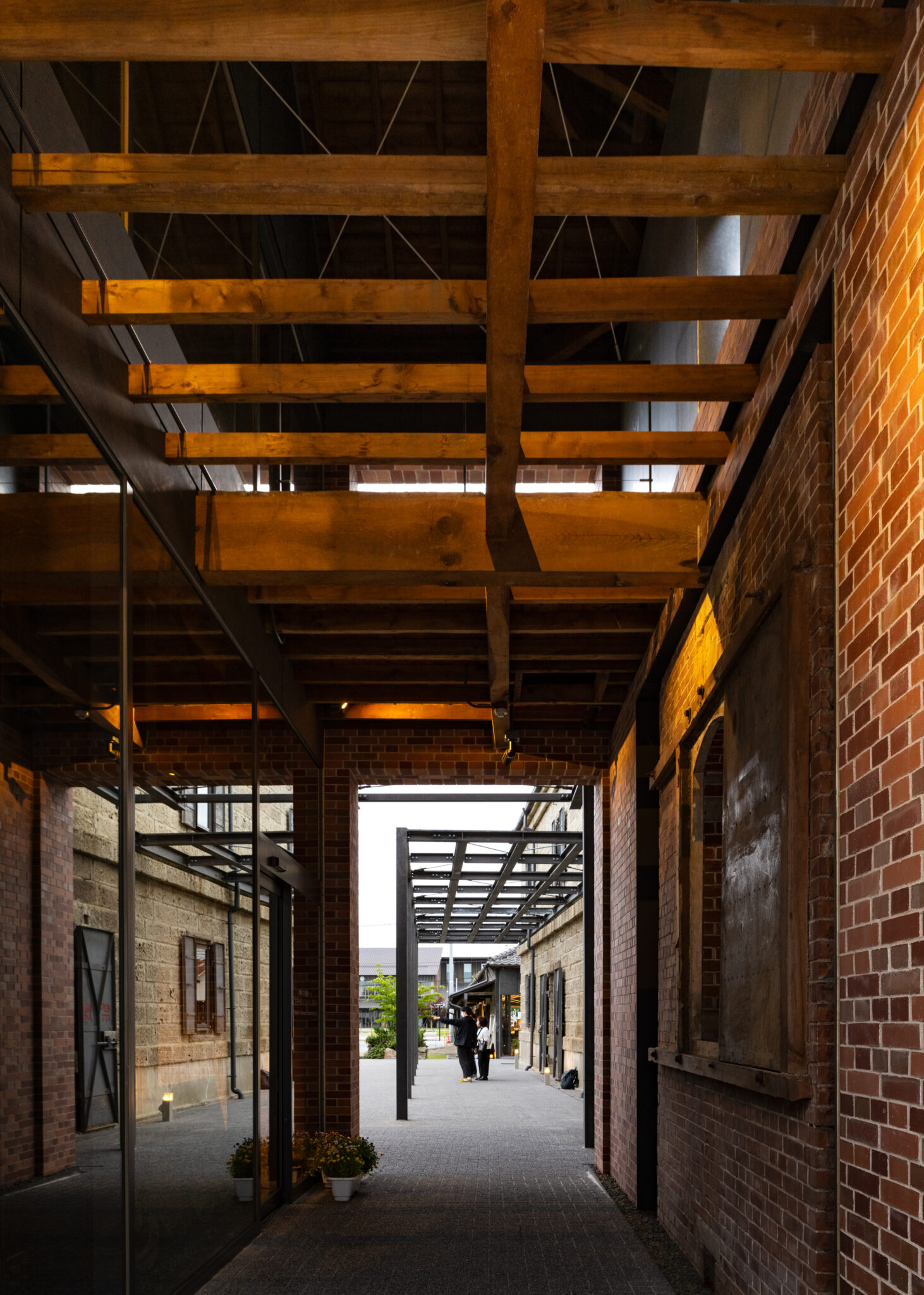
Widened openings make the inside of the warehouse one with the plaza outside.
03 · Roof and Warehouse No. 1
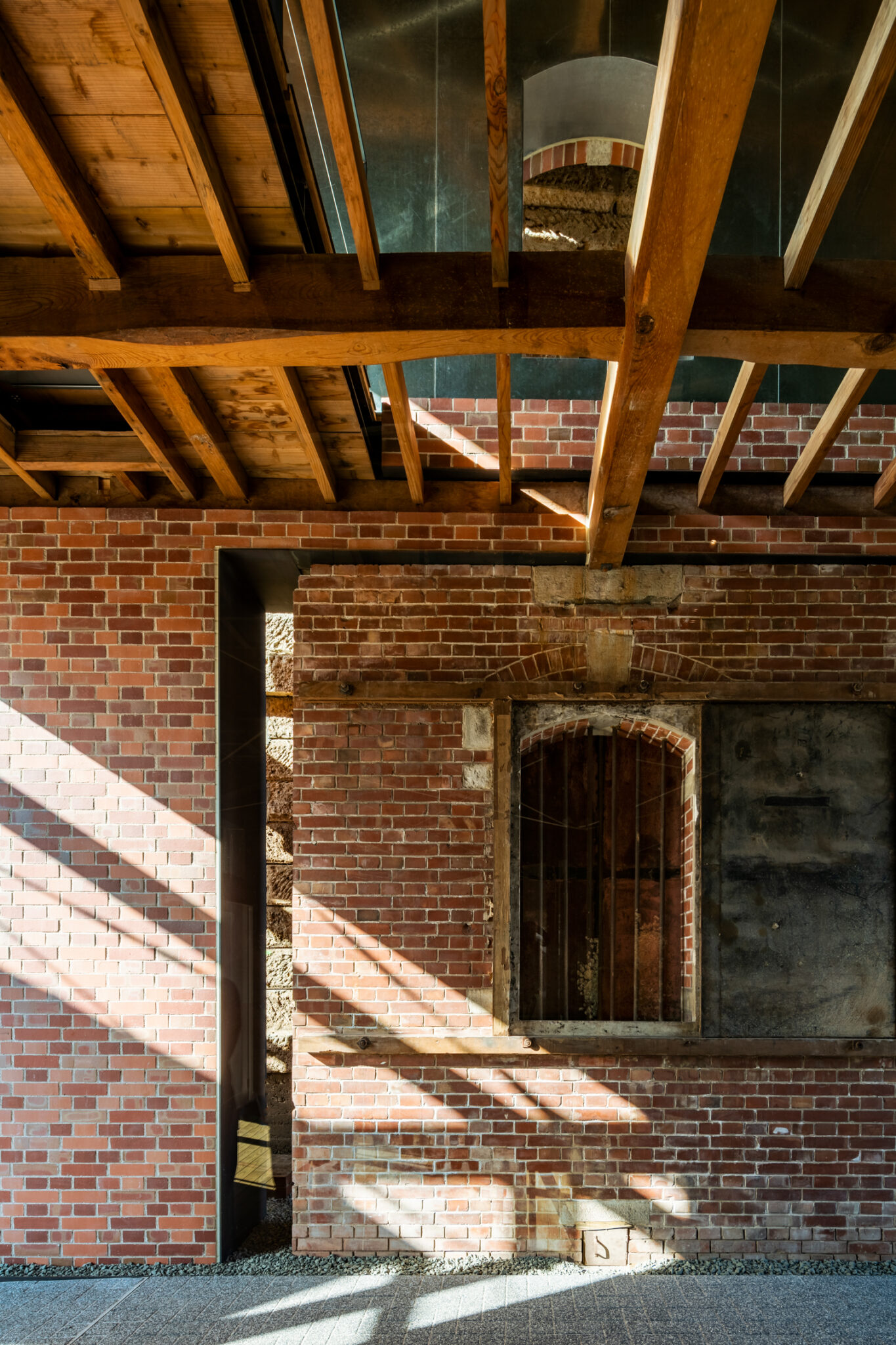
Daruma-kiln tiles and a brick warehouse
The roof was re-tiled with twice-fired tiles from a daruma kiln in Kanra — one of only a few left in Japan.
The brick Warehouse No. 1 (1901) is an exhibition space on Tomioka's silk history.

What is Oya stone?
A soft, easily worked stone quarried at Oya in Tochigi, long used for walls and fences.
Warehouse No. 2 at Tomioka is built of stacked Oya stone.

